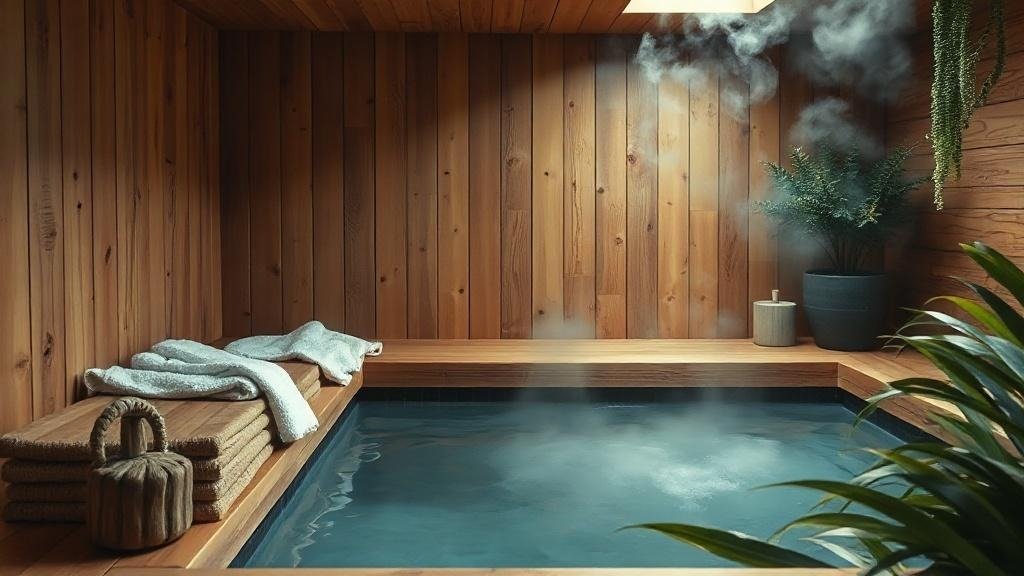
How Outdoor Sauna Models Compare on Cost, Heater, and Footprint is worth evaluating through the homeowner’s real week, not a perfect catalog photo. The best setup is the one that gets used, stays safe, and does not become a maintenance headache.
My neighbor Greg spent last October hauling barrel sauna staves into his backyard in Tacoma, convinced the whole thing would be done by Sunday. I watched from my kitchen window as he and his brother-in-law angled pieces around a fence post for two days, then waited another nine days for the electrician. The sauna itself was a solid kit. The problem was everything around the sauna: the gravel pad that wasn’t level, the 240V run that was longer than expected, the permit call he made after the panel box was already open. Greg loves his sauna now. He also says the install took three times longer than he planned and cost about $1,400 more than the sticker price.
That story plays out constantly. And it’s the reason I think the real decision in an outdoor sauna purchase is only about 50% product and 50% site prep. Get the site wrong and even a great kit becomes a headache.
So here’s the practical read: most home outdoor sauna builds land between $2,490 and $16,980 for the unit itself, plus another $1,000 to $4,200 for pad, electrical, and permits. The payoff is real if you actually use it. The research supports frequent sauna bathing for cardiovascular health in healthy adults. But the boring truth is that the build quality of your pad and the sizing of your heater matter more than which Instagram-worthy barrel you pick.
Reading a Spec Sheet Without Getting Played
Spec sheets are where most buyers lose the thread. There’s a lot of data on a product page, and most of it is formatted to impress rather than inform. Here’s what actually matters.
Heater sizing. Match the heater’s kilowatt rating to the cabin volume. This is not optional. A 6 kW Harvia heater is fine for a compact barrel. A larger cabin (say, 8×10) needs 8 to 9 kW. Undersized heaters run nonstop, burning out elements early. Oversized heaters cycle aggressively and waste electricity. The manufacturer’s published sizing chart is the reference, not a Reddit thread from 2019.
Wood species and joinery. Pre-cut tongue-and-groove cladding in cedar, hemlock, thermo-aspen, or redwood is standard and appropriate. Cheap kits substitute butt joints with felt strips. Those builds hemorrhage heat and look weathered within two seasons. If the listing doesn’t specify the joint type, ask. Silence on that point is not a good sign.
Door and hardware quality. This one gets overlooked. A sauna door swells and contracts with every session. Cheap hinges and latches fail first. Tempered glass doors are heavier but seal better than plywood doors with a window cutout.
For cold-plunge tubs (increasingly sold alongside saunas as a contrast therapy setup), check chiller horsepower, filtration micron rating, and whether sanitation is ozone, UV, or both. A 1/3 HP chiller holds 50°F in a small insulated tub in a temperate climate. That same chiller will struggle badly in a Phoenix garage in August.
What the Research Actually Shows
The study that gets cited the most is Laukkanen et al., 2015, published in JAMA Internal Medicine. It followed 2,315 middle-aged Finnish men over 20 years and found a dose-response relationship between sauna frequency and cardiovascular mortality. Men who used a sauna 4 to 7 times per week had roughly half the cardiovascular mortality of those who went once a week. That’s a striking association, though it comes with the usual cohort-study caveats (healthy-user bias, a culturally specific population, self-reported frequency).
A 2018 follow-up from the same research group, published in BMC Medicine, reported lower dementia incidence at the highest sauna frequencies. The proposed mechanism involves heat acclimation, improved endothelial function, and a heart-rate response that mimics moderate-intensity exercise.
For a home user, 20-minute sessions at 170°F to 195°F, two to four times per week, is a reasonable starting protocol. Hydrate before and after. Step out if you feel lightheaded. This isn’t a toughness contest.
Anyone with a cardiac history, uncontrolled blood pressure, or who is pregnant needs to clear sauna use with a physician before starting. Full stop.
The Install: Pad, Wiring, and the Stuff Nobody Budgets For
Most adults can handle the carpentry side of a pre-cut sauna kit with a helper and a full weekend. The panels are heavy, the instructions are sometimes translated from Finnish or Estonian in ways that require creative interpretation, and you’ll want a cordless impact driver and a rubber mallet. But it’s doable.
The electrical side is a different animal entirely. A typical traditional sauna heater pulls 4.5 to 9 kW on a dedicated 240V circuit at 30 to 50 amps. This is not where you save money by watching a YouTube video. A licensed electrician should run the circuit, pull the permit, and tie into your main panel. Cutting corners on 240V work is how house fires start. I don’t think that’s an exaggeration.
Pad work comes first. A 4-inch compacted gravel pad with drainage is enough for a barrel unit on flat, stable ground. A 4-inch reinforced concrete slab is the better call for cabin saunas, especially in freeze-thaw climates. Budget $4 to $7 per square foot installed for concrete. A pad that settles after the unit is sitting on it is a miserable and expensive problem.
Ventilation is non-negotiable. You need an intake vent near the floor under the heater and an adjustable exhaust on the opposite wall near the ceiling. Without airflow, you get stale air and uneven heating. Indoor builds need a passive vent to the exterior or a properly sized exhaust fan.
Permitting. Some counties exempt detached structures under 200 square feet from a building permit. But the electrical permit is almost always required because of the 240V circuit. Call your local building department before you buy the kit, not after. This call takes ten minutes and can save you a fine or a forced teardown.
All-In Costs, and Why the Sticker Price Lies
The sticker price on an outdoor sauna is like the base price on a new truck: technically accurate, functionally misleading. You need to budget the unit, the pad, the wiring, permits, and a small cushion for accessories and year-one maintenance.
Sauna units:
- Entry barrel kit: around $2,490
- Mid-tier cabin with a quality heater (Harvia or HUUM): $6,000 to $10,000
- Panoramic glass-front or premium thermo-aspen build: $12,000 to $16,980
Site work:
- Gravel pad: $400 to $900
- Concrete pad: $1,200 to $2,400
- 240V electrical run: $600 to $1,800, depending on distance from panel
Cold plunge (if you’re adding contrast therapy):
- Residential insulated tub with integrated chiller: $4,500 to $7,500
- Commercial-grade stainless with full filtration: $9,000 to $14,000
- Stock-tank DIY with manual ice: $400 to $900 (but you’re hauling ice bags forever)
On resale value, appraisers don’t give you dollar-for-dollar credit. But a well-built outdoor wellness setup reads as a legitimate selling feature in Northeast and Pacific Northwest markets.
On taxes: a residential sauna is rarely HSA or FSA eligible unless a clinician issues a Letter of Medical Necessity for a documented condition. Eligibility is patient-specific. Talk to your tax advisor before assuming a purchase qualifies.
Picking the Right Build for Your Situation
Infrared cabins, traditional indoor saunas, steam rooms, outdoor barrels, outdoor cabins. There are a lot of options and no single best answer.
An outdoor barrel sauna heats in 25 to 35 minutes and lives on a small pad. An indoor cabin heats faster but occupies living space and requires venting through a wall or ceiling. An infrared cabin runs at lower temperatures (120°F to 150°F), plugs into a standard outlet, and produces a physiologically different experience than a traditional Finnish-style sauna. Infrared is easier to install but it’s not the same thing, and people who tell you otherwise haven’t sat in both.
Cold plunges break down similarly. A purpose-built insulated tub with a 1 HP chiller holds 39°F to 45°F all day. A stock-tank conversion can hit the same range with ice but requires constant restocking. A chest-freezer conversion is cheap and mechanically marginal. I’ve seen them work. I’ve also seen them grow things you don’t want to think about.
The right answer is the build that matches your climate, your available space, your install constraints, and (this is the part people skip) the routine you’ll actually keep three months from now. A $12,000 cabin sauna used once a month is a worse investment than a $3,000 barrel used four times a week.
For a longer reference on model lineups, sizing, wood choices, heater wattage, and install considerations, see this how-to guide. It’s the kind of page worth bookmarking before you start pricing kits.
When to Call a Pro (Three Specific Moments)
The electrical run. Any time a 240V circuit is involved, hire a licensed electrician. That covers most traditional sauna heaters and commercial-grade cold-plunge chillers. No exceptions.
The pad, in difficult conditions. If you’re dealing with freeze-thaw cycles, soft soil, or a slope, bring in a contractor. A cracked or settled pad under a 900-pound barrel is nobody’s idea of a good weekend.
The health conversation. If you have an arrhythmia, uncontrolled hypertension, a recent cardiac event, Raynaud’s phenomenon, are pregnant, or are managing a chronic condition, a 10-minute conversation with your physician is the correct first step. The Laukkanen data is encouraging for healthy adults. It is not a prescription.
See also: How to Choose the Right Paint for Your Home
FAQs
Can I install an outdoor sauna on a deck?
Some smaller barrel units work on reinforced decks if the framing supports 600 to 1,200 lb of loaded weight. Most cabin units belong on a ground-level pad. Confirm load capacity with a structural engineer or your contractor before placing any unit on existing decking.
How often does an outdoor sauna need maintenance?
Wipe down benches after each session and oil the exterior cedar or hemlock once a year. For cold plunges, replace filter cartridges every 6 to 12 weeks, run ozone or UV sanitation on schedule, and drain and refill per the manufacturer’s interval.
Will my electric bill spike from an outdoor sauna?
A 6 kW heater running for one hour costs roughly $0.60 to $1.20 at typical US residential rates. Three 20-minute sessions per week adds about $4 to $8 monthly. A 1/2 HP cold-plunge chiller in steady state pulls 350 to 450 watts and adds $8 to $15 per month in most climates.
Is an outdoor sauna safe during pregnancy?
Pregnant adults should not start a new sauna or cold-plunge routine without explicit clearance from their OB-GYN. Core temperature changes carry real fetal risks, especially in early pregnancy. Defer to your physician on this one.
How loud is an outdoor sauna?
A traditional sauna heater is silent during operation. A cold-plunge chiller runs at roughly 45 to 55 dB at one meter, comparable to a quiet conversation. Position the unit so the chiller hum won’t disturb neighbors or interior bedrooms.
Disclaimer. This article is general consumer information, not medical advice. Heat and cold therapies carry real cardiovascular load. Anyone with arrhythmias, uncontrolled hypertension, Raynaud’s phenomenon, recent cardiac events, or who is pregnant should consult a physician before starting any new sauna or cold-plunge routine.
Any 240V electrical work should be completed by a licensed electrician under the appropriate local permit.
HSA and FSA reimbursement on wellness equipment is patient-specific and depends on a Letter of Medical Necessity from a clinician. Talk to your tax advisor before assuming a purchase qualifies.