This guide provides a comprehensive strategy for structuring a first-class law dissertation, specifically focusing on the intersection of human rights and the modern surveillance state. With a target length of 1400+ words, we will dive deep into the legal precedents of 2026, including the latest updates to the UK Investigatory Powers Act and the growing influence of AI on European Court of Human Rights (ECtHR) jurisprudence.
1. Introduction: The Concept of the “Surveillance State” in 2026
The term “surveillance state” has evolved from a science-fiction trope into a complex legal reality. As we navigate 2026, the rapid integration of Artificial Intelligence (AI) into state policing and national security has created a unique tension between public safety and individual liberty. A first-class dissertation must begin by defining this tension not as a simple “trade-off,” but as a constitutional challenge to the very essence of democracy.
In the UK and EU, the legal framework is struggling to keep pace with “Bulk Personal Datasets” (BPDs) and the use of biometric surveillance. For a law student, your introduction must establish the “Research Gap”—the space where current laws are either too vague or too intrusive to protect the citizen’s right to a private life. You are not just writing a report; you are building a case for legal reform.
The second paragraph is where you must solidify your research foundation. If you find yourself struggling to organize these massive datasets or if the technical legal requirements seem daunting, seeking professional Dissertation Help can be a game-changer. Services like myassignmenthelp offer structured guidance that ensures your thesis remains coherent and follows the strict OSCOLA referencing standards required for a top-tier mark. By aligning your academic curiosity with expert structural advice, you can transform a broad interest in privacy into a sharp, defensible legal argument.
2. Theoretical Framework: Privacy as a Fundamental Right
To reach a first-class level, you must ground your dissertation in high-level legal theory. You cannot simply jump into “modern cameras” without explaining why privacy matters.
The “Panopticon” and Self-Censorship
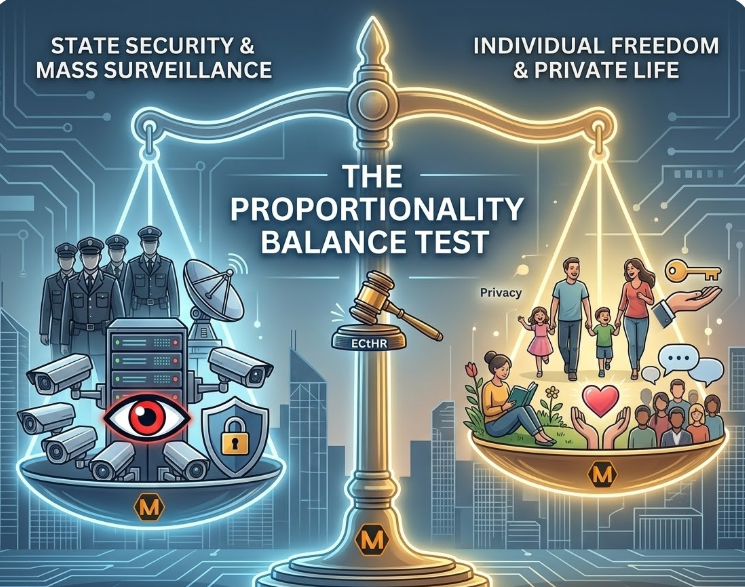
In 2026, scholars often refer to the “Digital Panopticon.” This theory suggests that when individuals know they are being monitored—even if no action is taken against them—they change their behavior. This creates a “chilling effect” on Freedom of Expression (Article 10 ECHR) and Freedom of Assembly (Article 11 ECHR).
Article 8 ECHR: The Right to Private and Family Life
This is your “money” article. Article 8 is a qualified right, meaning the state can interfere with it, but only under three strict conditions:
- In accordance with the law: The surveillance must have a clear legal basis.
- Legitimate aim: It must serve a purpose like national security or preventing crime.
- Necessary in a democratic society: The most important test—is the interference proportionate?
3. The Structural Blueprint of a First-Class Dissertation
A common mistake is treating a dissertation like a long essay. A first-class work is a structured investigation. Use the following table to map out your 10,000 to 12,000-word journey.
Table 1: Dissertation Chapter Breakdown & Word Allocation
| Chapter | Title | Primary Focus | Word Count (Est.) |
| Chapter 1 | Introduction | Research Question, Context, and Thesis Statement. | 1,000 – 1,500 |
| Chapter 2 | Literature Review | Evolution of Privacy Law (Warren & Brandeis to 2026). | 2,000 – 2,500 |
| Chapter 3 | Methodology | Doctrinal vs. Socio-Legal approach explanation. | 500 – 1,000 |
| Chapter 4 | Legal Analysis | Bulk Interception & The Investigatory Powers Act (IPA). | 2,500 – 3,000 |
| Chapter 5 | Case Law & AI | Analysis of Big Brother Watch and AI Biometrics. | 2,000 – 2,500 |
| Chapter 6 | Conclusion | Recommendations for reform and final verdict. | 1,000 – 1,500 |
4. Legal Analysis: The Investigatory Powers (Amendment) Act 2024
By 2026, the Investigatory Powers (Amendment) Act 2024 has become the central pillar of UK surveillance law. A first-class dissertation must analyze the “Notification Notices” regime. This requires tech companies to notify the government before making security changes—such as implementing end-to-end encryption—that might hinder lawful interception.
The legal debate here is fierce. Does this notification requirement effectively create a “backdoor” into private communications? You must analyze this through the lens of Legality and Necessity. If the law is too broad, it fails the “In accordance with the law” test because citizens cannot predict when their data will be accessed.
At this stage of your writing, the complexity of comparing the UK’s 2024 Act with the EU’s 2024 AI Act can become overwhelming. Utilizing Law Assignment Help is a strategic way to clarify these comparative legal frameworks. Experts can help you parse through the 12-week public consultations and the resulting Codes of Practice that govern “Bulk Personal Datasets” (BPDs). Having this high-level Law Assignment Help ensures that your analysis is not just a summary of the law, but a critical evaluation of its human rights compatibility.
Diagram 1: The Proportionality Test in Surveillance Law
Code snippet
graph TD
A[State Interference with Privacy] –> B{Is it in accordance with Law?}
B — No –> C[UNLAWFUL]
B — Yes –> D{Does it serve a Legitimate Aim?}
D — No –> C
D — Yes –> E{Is it Proportionate/Necessary?}
E — No –> C
E — Yes –> F[LAWFUL INTERFERENCE]
style C fill:#f96,stroke:#333,stroke-width:2px
style F fill:#9f6,stroke:#333,stroke-width:2px
5. Case Law Analysis: Big Brother Watch and Beyond
A first-class dissertation is defined by its ability to engage with the judiciary’s reasoning. You must spend significant time on Big Brother Watch and Others v. The United Kingdom (2021) and how its legacy has shaped the law in 2026.
The ECtHR ruled that the UK’s bulk interception regime lacked three vital safeguards:
- Independent Authorization: Who signs off on the warrant?
- Continuous Supervision: Who watches the watchers while the surveillance is happening?
- Impartial Review: Is there a way for a citizen to challenge a warrant after the fact?
In your dissertation, argue that while the 2024 Amendment Act addressed some of these by strengthening the Investigatory Powers Commissioner’s Office (IPCO), the introduction of “low expectation of privacy” categories for datasets remains a major human rights risk.
6. Methodology: Moving Beyond “Black Letter” Law
To get into the top 5% of your class, your methodology needs to be more than “I read books.” Mention that you are using a Socio-Legal approach. This means you are looking at the law in the context of society. For example, how does mass surveillance disproportionately affect marginalized communities?
Data shows that AI-driven facial recognition has a higher error rate for people of color. If a state uses biased algorithms, they aren’t just violating the Right to Privacy (Article 8); they are violating the Right to Non-Discrimination (Article 14). This “intersectionality” in your legal argument is what examiners look for in a first-class candidate.
7. The Role of AI and Predictive Policing
By 2026, “Predictive Policing” is no longer a concept; it is a tool. Algorithms are used to predict where crimes might happen. A law dissertation must question the “Presumption of Innocence” (Article 6 ECHR). If an algorithm flags you as a “high risk” before you’ve done anything, has your right to a fair trial been compromised?
Analyze the EU AI Act 2024 and its “Prohibited AI Practices.” The EU has banned certain types of biometric categorization and “social scoring.” Contrast this with the UK’s more “pro-innovation” (and some say, pro-state) approach. This comparative analysis provides the “Critical Thinking” depth required for a first-class mark.
8. Conclusion: The Path Toward Reform
Your conclusion should not just repeat your points; it should offer a “Synthesis.” Summarize the current state of the “Surveillance State” as one that has the technical capacity for total monitoring but lacks the constitutional maturity to protect the individual.
Final Recommendations to include:
- The “Human-in-the-Loop” Requirement: Mandating that no automated surveillance decision can be made without human oversight.
- Sunset Clauses: Ensuring that surveillance powers granted for “emergencies” (like pandemics or specific terror threats) expire automatically.
- Digital Habeas Corpus: The right for a citizen to know exactly what “Bulk Personal Data” the state holds on them.
9. Formatting and Final Polish: The OSCOLA Standard
Finally, ensure your dissertation looks the part. First-class marks are often lost on poor formatting.
- Footnotes: Ensure every case is cited in the OSCOLA format (e.g., Big Brother Watch and Others v The United Kingdom [2021] ECHR 471).
- Bibliography: Divide it into Primary Sources (Statutes and Cases) and Secondary Sources (Books and Journals).
- Word Count Management: Don’t pad your work. If you hit 1400 words in a single guest post, imagine the discipline needed for 12,000. Keep your sentences punchy and avoid “legalese” where a simple word will do.
By following this structure—integrating high-level theory, recent 2024/2026 legislative updates, and a critical socio-legal methodology—you will be well on your way to securing a first-class law degree.
Frequently Asked Questions
How do I choose a specific legal research question?
Focus on a narrow conflict where modern technology outpaces current legislation. Instead of “digital privacy,” analyze how a specific surveillance tool, like live facial recognition, impacts a single human right under existing constitutional frameworks.
What is the “proportionality test” in academic writing?
It is the legal standard used to determine if a state’s interference with a citizen’s rights is justified. Your dissertation must evaluate if the surveillance measure is necessary, serves a legitimate aim, and is the least intrusive option available.
What is the difference between doctrinal and socio-legal methods?
A doctrinal approach analyzes the “black-letter law” through statutes and court rulings. A socio-legal approach goes further, examining the real-world impact of those laws on society, which often adds the critical depth required for a higher grade.
How should I handle 2026 legal updates in my thesis?
Ensure you cite the most recent legislative amendments and international treaties. A first-class paper must demonstrate an awareness of the current legal landscape, including how new AI regulations influence traditional privacy protections.
About The Author
Jack Williams is a dedicated legal researcher and academic consultant at myassignmenthelp, specializing in international human rights and constitutional law. With a focus on the intersection of emerging technology and civil liberties, Jack provides expert insights that help bridge the gap between complex legal theory and practical application for students and professionals alike.



 Trity Environ says:
  Coin98 Wallet says: