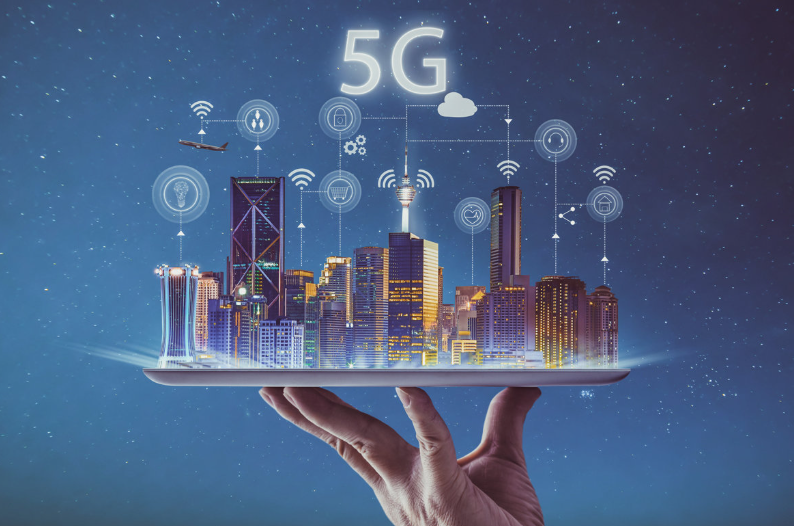
5G technology plays a crucial role in the development of smart cities. Its enhanced connectivity facilitates efficient communication across urban systems. This connectivity supports advancements in public services and infrastructure. Additionally, it opens avenues for sustainable initiatives and innovative applications. As cities evolve, understanding the implications of 5G on urban life becomes essential. What specific transformations will emerge as this technology integrates further into city planning and management?
Enhancing Connectivity and Communication
A significant advancement in urban infrastructure is the integration of 5G technology, which markedly enhances connectivity and communication within smart cities.
This technology facilitates smart transportation systems, enabling real-time data exchange for efficient traffic management.
Furthermore, enhanced security measures are implemented through interconnected devices, allowing for rapid response to incidents.
Ultimately, 5G empowers citizens with greater autonomy and improved urban living experiences.
See also: morningtimenews
Transforming Public Services and Infrastructure
While traditional public services often struggle with inefficiencies, the integration of 5G technology offers transformative potential for urban infrastructure.
Enhanced connectivity facilitates smart transportation systems that optimize traffic flow and reduce congestion.
Furthermore, 5G enables seamless digital governance, allowing citizens to access services and engage with local authorities efficiently.
This technological evolution empowers cities to become more responsive and adaptive to the needs of their residents.
Promoting Sustainable Development Initiatives
As cities increasingly adopt 5G technology, they gain a powerful tool to promote sustainable development initiatives.
This advanced connectivity supports the integration of green energy solutions into urban planning, enabling efficient resource management and reduced carbon footprints.
Enhanced data analytics facilitate smarter decision-making, optimizing energy consumption and waste management.
Ultimately, 5G empowers cities to create resilient infrastructures that foster environmental sustainability and enhance quality of life.
Enabling Innovative Technologies and Applications
5G technology serves as a catalyst for the development of innovative technologies and applications in urban environments.
Its low latency and high bandwidth facilitate the seamless operation of autonomous vehicles, enhancing urban mobility and safety.
Additionally, smart grids benefit from real-time data processing, optimizing energy distribution and consumption.
Together, these advancements empower cities, promoting efficiency and sustainability while fostering individual freedom in urban living.
Conclusion
In conclusion, the integration of 5G technology in smart cities is revolutionizing urban living through enhanced connectivity and communication. Notably, a report from the Global System for Mobile Communications (GSMA) predicts that by 2025, 5G networks will cover up to 40% of the global population, significantly impacting public services and infrastructure. This pervasive connectivity not only fuels innovation in transportation and energy management but also fosters sustainable development, ultimately improving the quality of life for city dwellers.